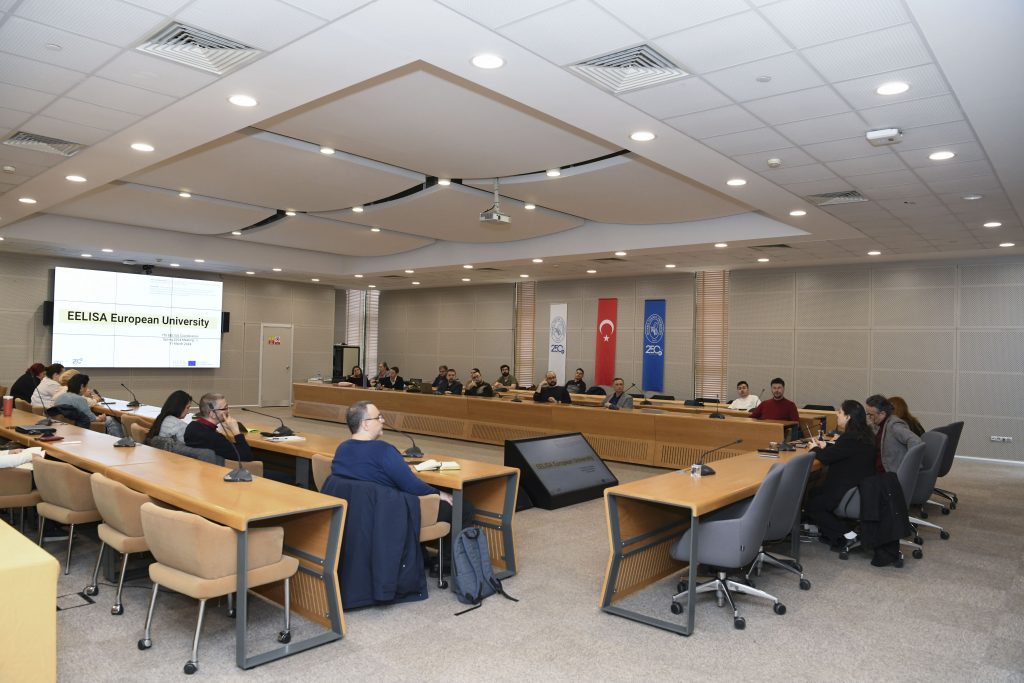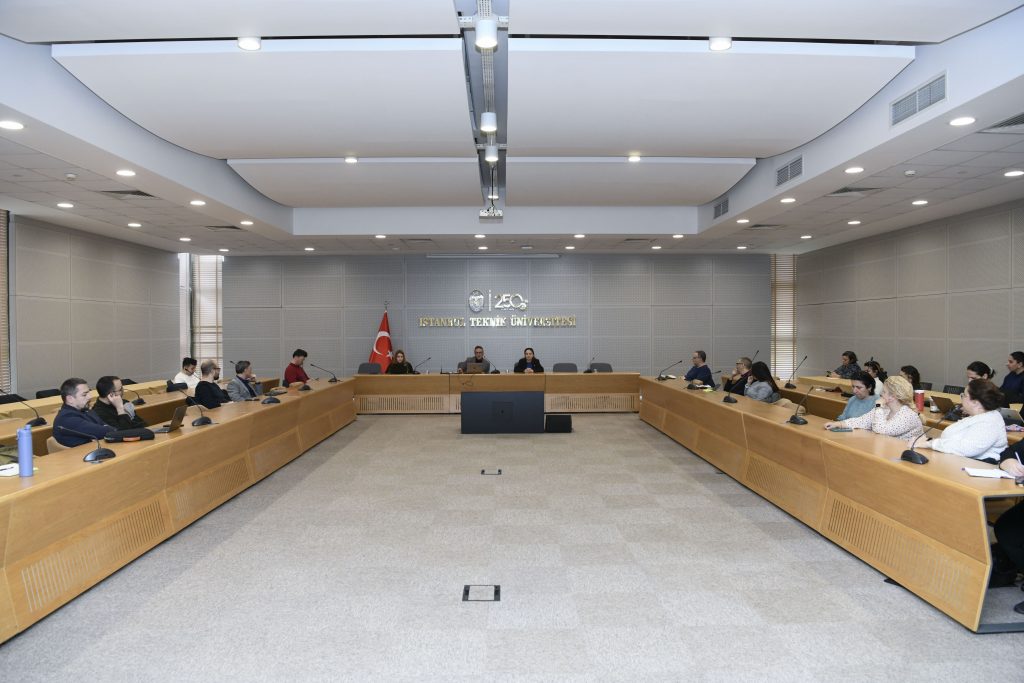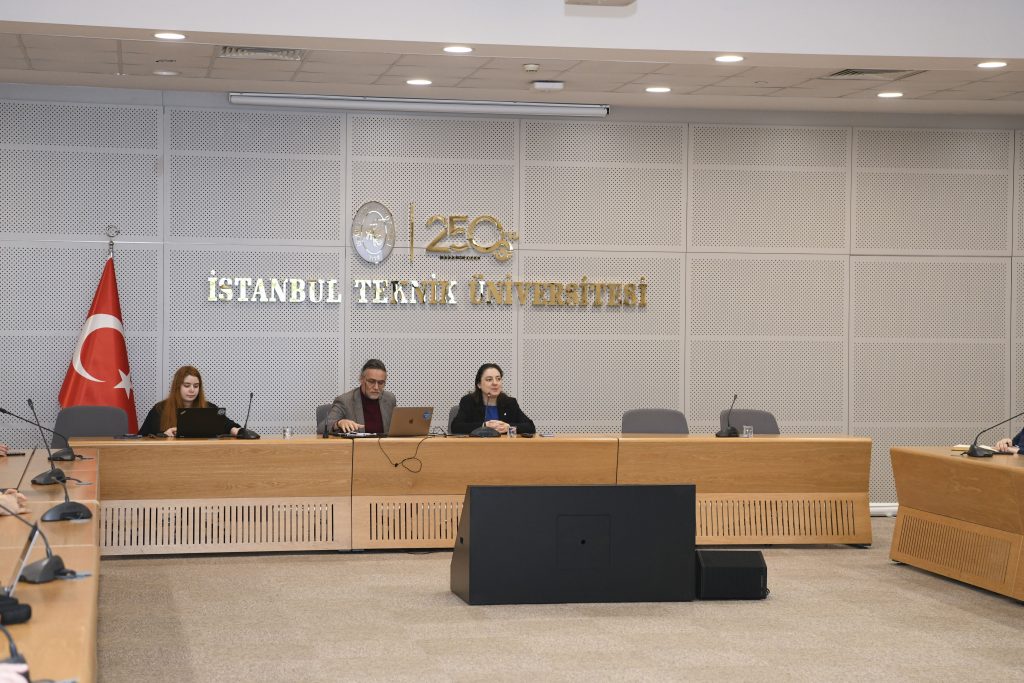
At the EELISA Unit-Program Coordinators meeting held on March 12, an EELISA Coordinator was elected from each unit and program of our university to effectively involve students, academics, and administrative stakeholders in the processes in the second phase of EELISA.
News: İTÜ Media and Communication Office
Istanbul Technical University (ITU) held an important meeting in the 2024 Global Impact Year to institutionalize the attainments achieved and opportunities offered at EELISA European University at the unit/program level, to ensure a healthy and continuous flow of information with our students and academics, and to share good practice examples.
Promotional meetings at departments by EELISA coordinators
At the first EELISA Unit-Program Coordinators meeting of the 2024 Spring term held at SDCC on March 12, 2024, EELISA Executive Board Member and our Vice-Rector Prof. Dr. Lütfiye Durak Ata made an opening speech. Assoc. Prof. Dr. Emrah Acar informed the participants about various issues such as the studies conducted as part of EELISA, attainments, strategic vision, and scope.
To better introduce and adopt EELISA in our university, an EELISA coordinator was elected from each of 50 departments and divisions. At the meeting, EELISA’s institutional structure and ITU’s role in EELISA were explained to the elected coordinators. The coordinators shared their opinions and suggestions concerning their key roles.
It was decided to organize periodic meetings in the future and thus to ensure that students, academics, and administrative staff are informed on a departmental basis.
It was aimed to establish and increase the number of ITU-based communities led by our students and academics among the EELISA communities, which form the backbone of EELISA’s research and learning ecosystem. The idea of coordinators organizing promotional meetings periodically on a departmental basis was discussed.
The objectives of EELISA 2.0
EELISA European University had successfully completed the first funding cycle of Erasmus+ covering the years 2020-2023. In the second phase of EELISA, which started on November 1, 2023 and covers the years 2023-2027, it is aimed to scale and expand the outputs and impact created in the fields of education and research by effectively involving the students, academics, and administrative stakeholders of our university in the processes.
Source: ITU News